The Third Saudi Transformation

From Oil
to Medicine

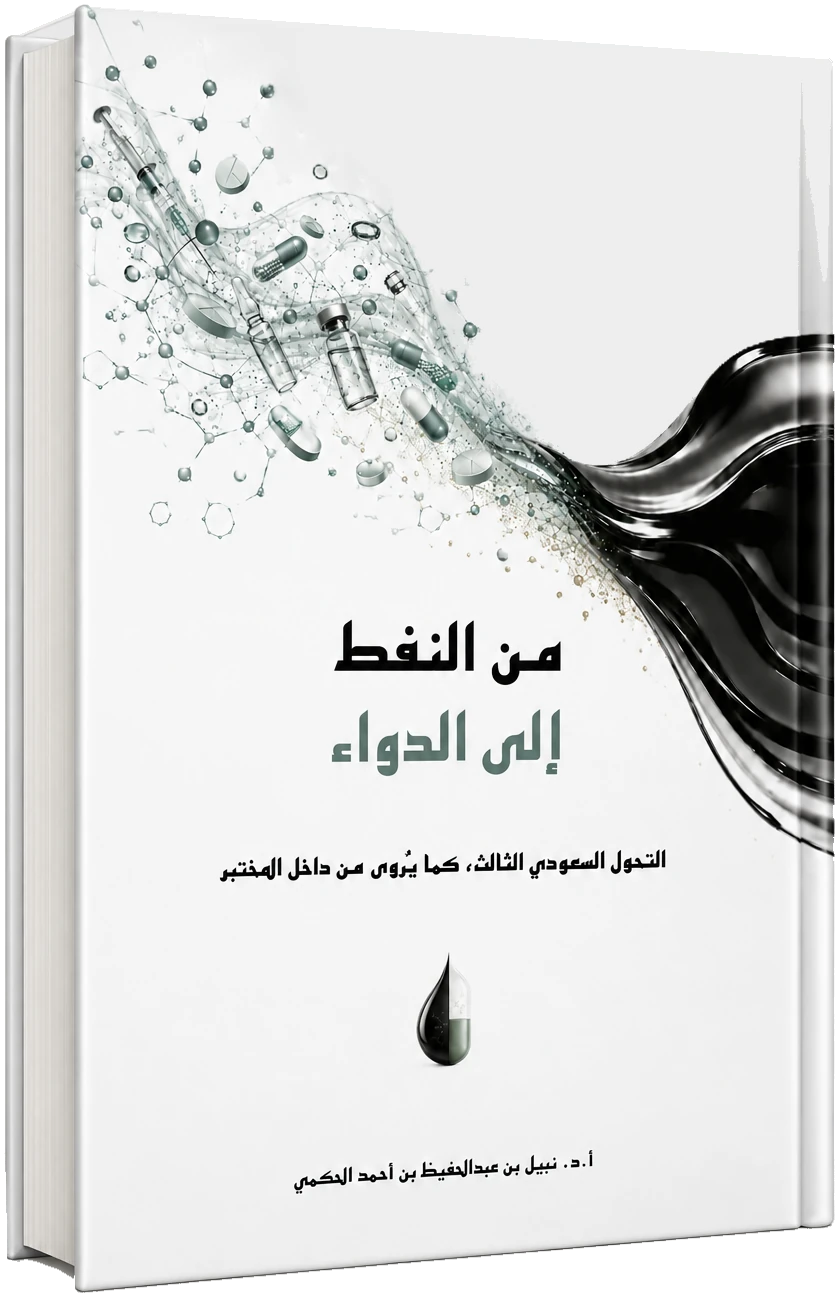
A journey from memory to the future, and from disease to industry — as told from inside the lab.

By Prof. Nabil bin Abdulhafiz bin Ahmed Alhakamy

From Oil to Medicine — a book by Prof. Nabil Alhakamy
28Chapters
4Parts
1922History from
Discover more
From the desert we built the ability to survive; from oil we built the modern state;
and from pharmaceutical and biotech industries we will build a coming renaissance of science and knowledge.

— From the book's introduction

Not about medicine alone, but the path that makes medicine possible

Medicine doesn't appear suddenly on the pharmacy shelf, and its first moment isn't when a doctor prescribes it. It begins years earlier: in a scientific question, then a hypothesis, then an experiment, then data that needs someone to trust it and someone to doubt it at the same time — before it finally reaches the hand of a patient waiting for something more than words.

That's why the conversation about Saudi Arabia's pharmaceutical future can't be about factories alone, nor strategies alone, nor capital alone. This book is a journey stretching from memory to the future, from disease to industry, from the lab to the company, from strategy to the factory, and from Hajj to global health.

The book's first hope is to move the question of medicine in Saudi Arabia from "what do we buy?" to "what do we build and develop?", and from "who owns the product?" to "who owns the knowledge?"

A window into how nations build their capabilities

This is not a book about medicine in the narrow sense. It's a book about the state, science, the economy, the patient, and the future taking shape in front of us now.

🇸🇦

If you live in Saudi Arabia

Because you're living a rare moment in your country's history — a shift from an economy built on a natural resource to one built on knowledge and precision industry.

🔬

If you work in healthcare

A physician, pharmacist, or researcher: you'll find a reading of the context you work inside every day, and the threads that connect your work to a larger system.

📈

If you're a decision-maker

An investor or official: the book offers not abstract numbers, but a way to order capabilities into a clear system that keeps the patient at the end of every chain of decisions.

The book's structure

A preface chronicling a century of Saudi pharmaceutical industry, then four parts taking the reader from the legacy to the wider horizon.

Part One

The Legacy

The honest starting point: how Saudi Arabia's health and pharmaceutical system was built, what we truly own, and what we don't yet.

Why read it? To understand where we begin before we talk about where we're going.
  1. The Cost of Building
  2. The Weight We Carry
  3. What the Body Remembers
  4. The Pharmacy We Don't Own
Part Two

Tools and New Horizons

AI, the genome, and data: how the tools of making medicine are changing before us, and where the chance to leap to the front lies.

Why read it? To know the tools that will make tomorrow's medicine — and how they're used.
  1. Machines That Learn Molecules
  2. The Quantum Horizon
  3. Rewriting the Code
  4. Data and Bias
  5. A Medicine's Moment
  6. The Patient Is the Unit of Measure
  7. Rare Diseases and the Saudi Genome
  8. Medicine in Microgravity
Part Three

Building the Industry

From idea to company: the returnees, strategy, venture capital, and factories — the elements that turn science into a standing industry.

Why read it? To understand how a discovery becomes a product, jobs, and an economy.
  1. The Returnees
  2. The Saudi Experience
  3. Strategy
  4. Venture Capital
  5. From Discovery to Company
  6. Pharmaceutical Industries at Home
Part Four

The Wider Horizon

Where Saudi Arabia can offer the world something distinctive: antimicrobial resistance, women's health, longevity, and mass-gathering medicine at Hajj.

Why read it? To see the files this country could lead globally.
  1. Antimicrobial Resistance and Saudi Arabia's Position
  2. Women's Health and Maternal Medicine
  3. Longevity as a National Bet
  4. What Saudi Arabia Brings
  5. Hajj and Mass-Gathering Medicine
  6. One Health: When the Environment Becomes Part of Care
  7. Folk Medicine and the Islamic Medical Heritage
  8. Charitable Work and the Pharmaceutical Mission
  9. Why Saudi Arabia, and Why Now?
  10. The Vision, Until It's Translated

The Author

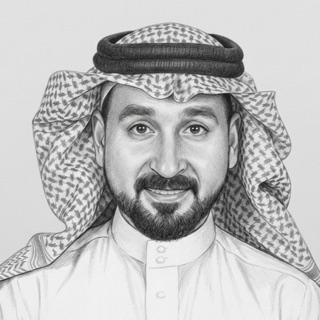
Prof. Nabil bin Abdulhafiz Alhakamy

Prof. Nabil bin Abdulhafiz bin Ahmed Alhakamy

A Saudi researcher and advisor in pharmaceutical industries, biotechnology, and health innovation, holding PharmD, MSc, and PhD degrees. He founded and led several initiatives, centers, and specialized entities — most notably the Knowledge Economy Center, the "Made in Saudi Arabia" center, the Research Excellence Center in Pharmaceutical Industries, and the Saudi Scientific Society for Pharmaceutical Industries, as well as Al-Tiryaq First Medical for pharmaceuticals — and contributed to launching the first university medical products in national markets. He focuses on translating complex scientific knowledge into a language that decision-makers, investors, physicians, researchers, and general readers can engage with.

Dr. Alhakamy is a weekly columnist at Makkah Newspaper, writing at the intersection of pharmaceutical innovation, biotech investment, healthcare policy, and the emerging economy. He is a professor at the Faculty of Pharmacy, King Abdulaziz University, and a co-founder of several Saudi and American ventures in health, pharmaceuticals, and biotechnology. A TEDx speaker, he has helped spotlight pharmaceutical research and scientific innovation. His writing draws on three decades at the intersection of the pharmaceutical industry, academic research, and entrepreneurship — simplifying what happens inside labs, boardrooms, and regulators into trustworthy public knowledge.
Get your copy

Read the book's introduction before you buy:

📖 Read an excerpt (PDF)